7 Tips to Communicate With Confidence in Speech and Writing
Dr. Niklas Richter ·
Listen to this article~4 min

Discover 7 practical tips to communicate with more confidence in both speech and writing. From dropping the word 'but' to ending meetings with impact, these small shifts create big results.
The way you communicate shapes how people perceive you. It's not just about the words you choose, but how you deliver them—whether you're speaking face-to-face or writing an email. Small shifts in your language can create a massive difference in impact.
In this post, I'll share seven practical tips to help you come across as stronger and more confident in both spoken and written communication. From the "action-benefit sentence" to cutting the word "but," from replacing "thank you for your patience" to ending meetings in a way that sticks with people.
### Start With the Action-Benefit Sentence
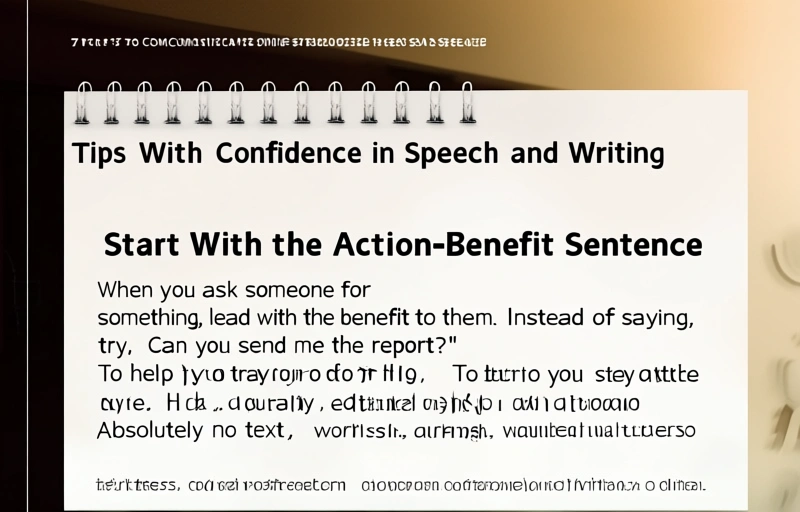
When you ask someone for something, lead with the benefit to them. Instead of saying, "Can you send me the report?" try, "To help you stay on track for the deadline, could you send the report by 3 p.m.?" This small tweak shows you're thinking about their needs first. It's a simple shift that builds trust and cooperation.
### Drop the Word "But"
"But" negates everything that comes before it. If you say, "Your idea is great, but..." the other person only hears the criticism. Replace "but" with "and." For example: "Your idea is great, and we might need to adjust the timeline." This keeps the conversation positive and collaborative.
### Say "Thank You for Your Flexibility" Instead of "Sorry for the Delay"
Apologizing too much can undermine your authority. Instead of saying, "Sorry for the inconvenience," reframe it as, "Thank you for your flexibility." This turns a negative into a positive and shows gratitude instead of weakness. It works wonders in emails and meetings alike.
### End Meetings With a Clear Takeaway
Don't let meetings fizzle out. Close with a summary of decisions and action items. For example: "So, we agreed on the budget increase, and Sarah will send the revised timeline by Friday. Does that work for everyone?" This ensures everyone leaves with clarity and a sense of progress.
### Use Simple, Direct Language
Avoid jargon and complex sentences. Say what you mean clearly. Instead of "We are currently in the process of evaluating options," say "We're reviewing our choices." Direct language signals confidence and makes you easier to understand.
### Embrace Pauses in Speech
Silence isn't awkward; it's powerful. When you pause before answering a question, it shows you're thoughtful. When you pause after a key point, it lets the information sink in. Practice pausing for two seconds in conversations—it'll make you sound more composed.
### Write With a Conversational Tone
In written communication, aim for a natural, human voice. Use contractions like "you're" and "don't." Keep sentences short. Read your email out loud before sending—if it sounds stiff, rewrite it. Your goal is to connect, not to impress.
These seven tips can transform how others perceive you. Start with one or two and build from there. Small changes in word choice lead to big changes in impact.
If you're ready to build stronger relationships with the people around you, I've created a free guide called "7 Principles of Relational Intelligence." It's packed with actionable insights to help you connect more deeply. You can download it at businessdad.be/7principes.
For more exclusive tips and insights, sign up for my newsletter, the Business Dad Monthly Briefing, at businessdad.be/monthly.