Building a Million-Dollar Bonsai Business: Lessons from…
Dr. Niklas Richter ·
Listen to this article~4 min
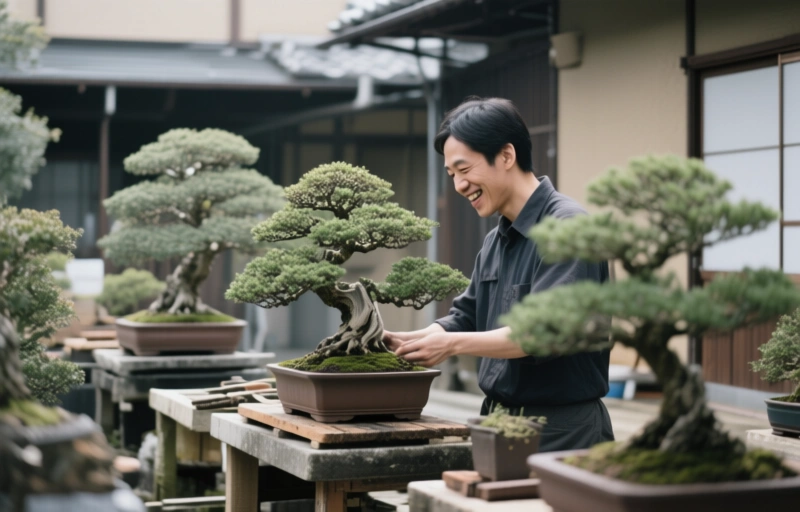
Discover how Yannick Kiggen turned his passion for bonsai into a million-dollar business after apprenticing in Japan. Learn about high-end bonsai valuation, quality recognition, and essential lessons for niche entrepreneurship.
Ever wonder how a passion for miniature trees can turn into a thriving, high-end business? Let's talk about Yannick Kiggen, the founder of Yama Bonsai. He didn't just read a book or watch a few videos. No, this guy moved to Japan as a young man to apprentice under one of the world's greatest bonsai masters. That's commitment.
In a recent conversation, he shared how he transformed that deep passion into a sustainable niche enterprise. We're talking about building trust in a market where quality is everything. Where honesty and perfectionism aren't just nice traits—they're your biggest assets.
### From Passion to Profit
It's one thing to love bonsai. It's another to build a business around it. Yannick's journey shows that success in a niche market starts with genuine expertise. You can't fake this. Clients can tell when you're the real deal versus someone just trying to make a quick sale.
He built his reputation slowly, focusing on craftsmanship above all else. In a world of mass production, his dedication to authentic, traditional techniques set him apart. It's a reminder that sometimes, the slow path is the only one that leads somewhere worth going.
### The High-Stakes World of Luxury Bonsai
Now, let's talk numbers. We're not discussing the $50 tree from your local garden center. Yannick operates in the realm of high-end bonsai, with international clients that include celebrities like Tommy Lee and chef Nick Bril. The prices? They can soar up to $1.4 million for a single, exceptional specimen.
That raises some fascinating questions:
- What actually makes a bonsai truly valuable?
- How do you recognize real quality versus just an expensive price tag?
- Is caring for these living artworks really as difficult as people imagine?
### Recognizing True Quality
Quality in bonsai isn't just about age or size. It's about harmony, balance, and the story the tree tells. A truly valuable bonsai demonstrates:
- Impeccable health and vitality
- Artistic composition that feels natural
- Evidence of skilled, patient cultivation over years or decades
- That intangible "presence" that separates good from extraordinary
As Yannick puts it: "The best bonsai don't just sit in a pot—they command the space around them."
### Is Bonsai Care Really That Hard?
Here's the truth most beginners miss: bonsai care isn't necessarily difficult, but it is consistent. These trees need regular attention, but they don't require magic. The real challenge isn't the daily care—it's developing the patience to work on a timescale measured in years, not weeks.
Common misconceptions include:
- Thinking bonsai are indoor plants (most aren't)
- Believing they need constant pruning (they need thoughtful pruning)
- Assuming expensive tools guarantee success (skill matters more)
### Lessons for Any Niche Business
This conversation was packed with insights that apply far beyond the world of bonsai. Whether you're selling handmade pottery, consulting services, or software, these principles hold true:
Start early with your learning. Don't wait until you're "ready" to begin mastering your craft.
Keep learning relentlessly. The day you think you know everything is the day you start falling behind.
Dare to choose excellence. It's scary to position yourself at the top of your market, but that's often where the most rewarding work happens.
Build your business around what you genuinely love. When quality matters most, passion isn't just nice—it's necessary. You'll need that passion on the days when progress feels slow or challenges seem overwhelming.
### The Takeaway for Entrepreneurs
What Yannick's story really shows us is that niche markets reward depth over breadth. In a world chasing viral trends and mass appeal, there's still tremendous value in becoming the absolute best at something specific.
It requires patience. It demands authenticity. And it means turning down opportunities that don't align with your standards. But the result? A business built on trust, where your reputation precedes you, and where your work speaks for itself.
That's the kind of foundation that lasts. Whether you're shaping miniature trees or building any other kind of enterprise, remember: the deepest roots support the strongest growth.