How to Invest €10,000: A Finance Expert's Perspective
Dr. Niklas Richter ·
Listen to this article~6 min

Finance expert Thomas Guenter shares how he'd approach investing €10,000 today. Learn why context matters more than amount, the real investment trinity of risk/time/discipline, and what to absolutely avoid.
After our conversation with Thomas Guenter aired, I kept getting the same question from listeners. It was a simple one, really: "Can you share just that part where he explains what he'd do with €10,000?"
So I went back to Thomas, the founder of Finhouse, and asked him directly. I said, "Look, if you had €10,000 in capital today, how would you actually handle it?"
Now, let's be clear right from the start—this isn't investment advice. It's something different, and maybe more valuable. It's how someone who works with money every single day thinks about investing. It's about the mindset, not just the mechanics.
### Why Your Context Matters More Than The Amount
Thomas made a point that really stuck with me. He said the amount itself—whether it's €10,000 or €100,000—is often less important than your personal context. What does that even mean?
Well, think about it this way. €10,000 means something completely different to someone who's just starting their career versus someone who's been saving for decades. It means something different if you have high-interest debt hanging over you, or if you're sitting on a solid emergency fund already.
Your financial situation, your goals, your timeline—that's your context. And without understanding that context first, any investment decision is just guessing. You wouldn't use the same map for every journey, right? So why would you use the same investment strategy for every financial situation?
### The Real Investment Trinity: Risk, Time, and Discipline
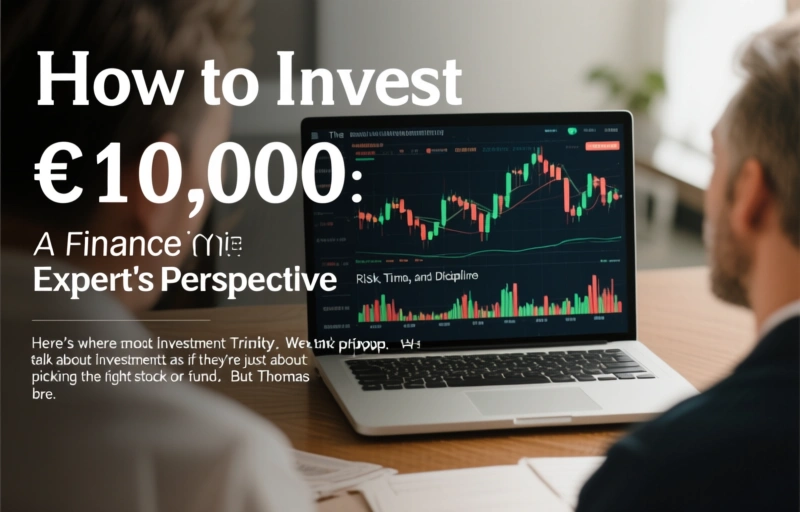
Here's where most people get tripped up. We talk about investments as if they're just about picking the right stock or fund. But Thomas breaks it down to three core elements that matter way more.
First, there's risk. Not just "how much can I lose," but "how much volatility can I stomach without panicking?" Because let's be honest—markets go down sometimes. If you're going to sell at the first sign of trouble, you've already lost.
Then there's time. This isn't just about how long you plan to invest. It's about aligning your investments with when you'll actually need the money. Money you need next year shouldn't be in the same place as money you won't touch for twenty years.
And finally, discipline. This might be the hardest part. It's easy to get excited about investing when markets are rising. It's much harder to stick with your plan when everything feels like it's falling apart. Discipline is what separates successful investors from everyone else.
### The Rendement Trap: Why Chasing Returns Backfires
This might be the most counterintuitive part of our conversation. Thomas pointed out that most people focus entirely on returns—that percentage number we all want to maximize.
But here's the thing: focusing solely on returns is like driving while only looking at the speedometer. You might be going fast, but you have no idea if you're headed toward a cliff or stuck in a ditch.
When you chase returns, you tend to jump into investments after they've already done well. You buy high. Then, when those investments inevitably have a bad period, you panic and sell low. It's a perfect recipe for losing money.
Instead, Thomas suggests focusing on the process. Are you investing regularly? Are you keeping costs low? Are you staying diversified? Get the process right, and the returns tend to follow over time.
### What NOT to Do With €10,000 Today
I asked Thomas what he would absolutely avoid doing with €10,000 right now. His answer was refreshingly direct.
- Don't put it all into a single "hot" stock or cryptocurrency just because everyone's talking about it
- Don't try to time the market—professionals can't do it consistently, and neither can you
- Don't ignore your emergency fund to invest more
- Don't invest in anything you don't understand
- Don't let taxes drive your investment decisions entirely
He put it simply: "The flashy, exciting investments get all the attention. But the boring, steady investments are what actually build wealth over decades."
### Putting It All Together
So what's the takeaway from all this? Investing isn't about finding a magic formula or following the latest trend. It's about understanding yourself first—your goals, your timeline, your ability to handle risk.
Then it's about building a plan that makes sense for that person you just described. And finally, it's about having the discipline to stick with that plan even when it feels uncomfortable.
€10,000 is a significant amount of money. It's enough to make a real difference in your financial future if handled well. But it's also enough to lose if you approach investing like a casino rather than a long-term journey.
Thomas left me with this thought: "The best investment you can make isn't in any particular stock or fund. It's in your own financial education and in building habits that will serve you for decades." And honestly, I think he's right about that.
Remember, this is one person's perspective—someone who lives and breathes finance every day. Your situation is unique. Your path will be too. But hopefully, these insights give you a better framework for thinking about your own financial decisions, starting with whatever amount you have to work with today.