Samsung Display Strategy: Solving Problems Over Selling…
Dr. Niklas Richter ·
Listen to this article~4 min
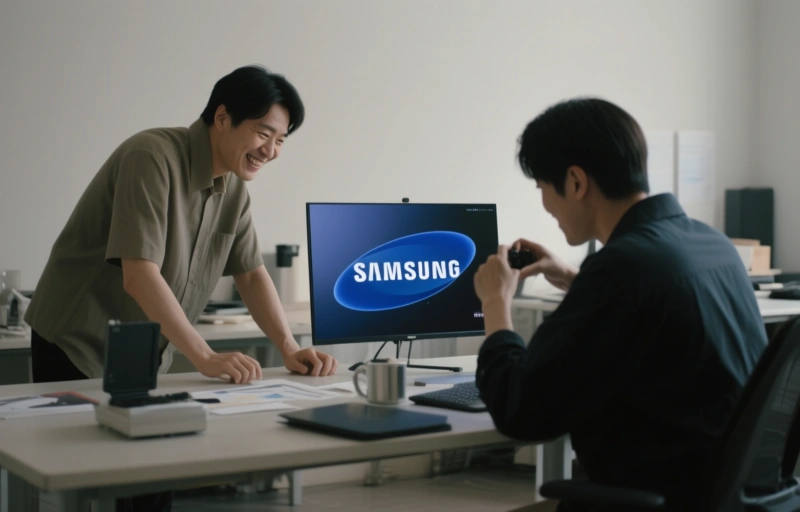
A conversation with Samsung's Evert van Camp on why display technology only matters when it solves real problems. We explore how context beats hardware, why partners are key, and how screens shift from costs to revenue drivers.
I recently sat down with Evert van Camp, who's been leading Samsung's display division for the Benelux region for over a decade. He's had a front-row seat to a massive shift in how we think about technology. It's not about the product anymore—it's about the solution. We talked about why a display only matters when it solves a real problem, and why context, application, and business logic now trump resolution and specs every time.
### Why a Screen Alone Has Little Value
Think about it. A monitor sitting in a box is just... a thing. It's inert. Its value is zero until it's placed somewhere with a purpose. Evert put it perfectly: a display becomes relevant the moment it removes a friction point or enables a new way of working. It's not about the pixels; it's about the people using it and the job they need to get done.
### Context is King, Hardware is Just the Crown
This was a big theme. The hardware itself is becoming a commodity. What truly differentiates a solution is how it fits into a specific environment. Is it for a busy retail floor where brightness and reliability are everything? Is it for a control room where split-second decisions depend on clarity? The context dictates everything. The specs are just a starting point.
### Samsung's Partner-First B2B Philosophy
Here's something interesting: Samsung doesn't sell directly to businesses. They go all-in on their partner network. Why? Because partners understand the local landscape, the unique challenges of each vertical—whether it's healthcare, education, or corporate offices. They're the ones who can tailor the technology to the actual business logic. Samsung provides the canvas; the partners paint the picture.
### From Cost Center to Revenue Generator
This is a crucial mindset shift for any business leader considering tech investments. Displays are evolving from being a simple expense on a balance sheet to a tool that can generate income. A digital menu board that upsells, a wayfinding display that improves customer experience and increases dwell time, a video wall in a corporate lobby that strengthens brand perception—these aren't just costs. They're investments with measurable returns.
### The Quiet Promise of E-Paper
We also touched on e-paper technology. Evert sees it as the potential beginning of *true* paperless communication. Think about dynamic pricing tags in stores that update instantly or low-power signage in offices. It's not about replacing every screen, but about finding the right, sustainable tool for the right job. Sometimes the best innovation is the simplest one.
### Leadership, Listening, and Staying Relevant
Our conversation naturally flowed beyond pure tech. We discussed what leadership looks like in this environment. It's about listening to your team, conducting meaningful performance reviews that actually develop people, and fostering innovation without adding unnecessary complexity.
Evert shared a powerful thought: staying relevant is more important than constantly adding "more" technology. It's about depth, not just breadth. It's about ensuring the technology you deploy actually works—in the right environment, for the right people.
This wasn't a product pitch. It was a genuine discussion about the philosophy behind the pixels. It's a reminder that in business, the flashiest tech isn't always the best. The best tech is the kind you almost don't notice because it just... works. It seamlessly integrates, solves a problem, and lets people focus on what they do best.
As one key takeaway from our talk, Evert noted, **"The most powerful display is the one that disappears, allowing the content—and the human interaction—to take center stage."** That's the real goal.