The Power of Positive Feedback: How to Truly Motivate People
Dr. Niklas Richter ·
Listen to this article~5 min
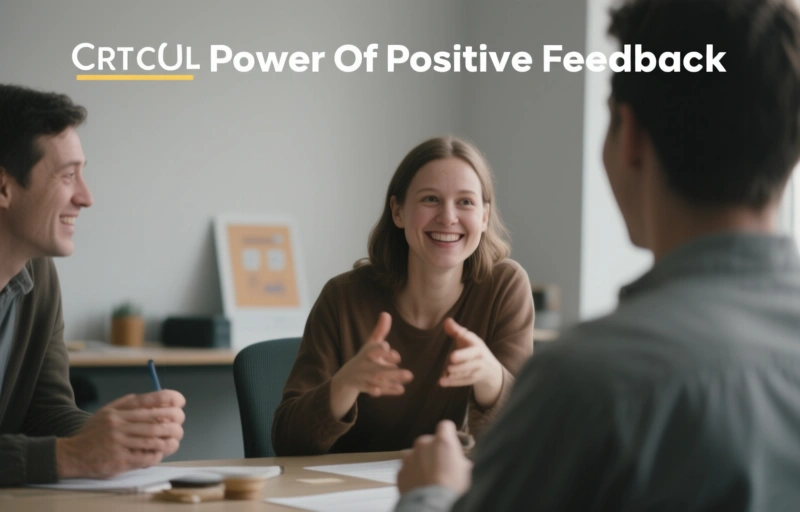
Learn why positive feedback beats criticism every time. Discover how to give genuine appreciation that motivates people to grow in your team, family, and beyond.
Do you tend to call people out on their mistakes? Or do you feel like you're always the one getting called out? That's a natural reflex, unfortunately. But positive feedback and genuine appreciation can take you much further.
In this post, I'll show you the real power of positive reinforcement. Not as a trick or a technique, but as an authentic way to help people grow—in your team, your family, and beyond. You'll learn the difference between a compliment and real appreciation, why positive feedback works better than criticism, and how to create a safe environment for growth.
### Why Positive Feedback Beats Criticism
Think about the last time someone pointed out a flaw in your work. How did it feel? Probably a little deflating, right? Criticism triggers our fight-or-flight response. It shuts down creativity and makes us defensive. Positive feedback does the opposite. It activates the brain's reward centers, releasing dopamine. That makes us feel good and more open to learning.
Here’s the key: positive feedback isn't about ignoring problems. It's about framing growth in a way that encourages rather than discourages. When you highlight what someone did well, they're more likely to repeat that behavior. And they'll trust you more when you do need to address an issue.
- **Criticism**: "This report is late and incomplete."
- **Positive Feedback**: "I appreciate the effort you put into this report. Let's work together to polish the final sections."
See the difference? One shuts down, the other opens up.
### The Difference Between a Compliment and Real Appreciation
A compliment is nice. "Great job!" feels good in the moment. But real appreciation goes deeper. It's specific and personal. It shows you've noticed the effort, not just the outcome.
For example, instead of saying "You're a good team player," try: "I noticed how you stayed late to help Sarah finish her presentation. That kind of support really boosts our team's morale." That's appreciation. It tells the person exactly what they did right and why it matters.
Real appreciation builds trust and connection. It makes people feel seen and valued. And that's what truly motivates them to keep growing.
### How to Give Positive Feedback That Sticks
Giving effective positive feedback isn't hard, but it does take intention. Here are a few simple rules:
- **Be specific**: Don't just say "good work." Say "Your analysis of the market trends was spot-on. It helped us decide on the new strategy."
- **Be timely**: Don't wait a week. Give feedback as soon as possible after the behavior.
- **Be genuine**: People can spot a fake. Only give feedback when you truly mean it.
- **Focus on effort, not just results**: Sometimes the outcome isn't perfect, but the effort was huge. Acknowledge that.
> "People work for money but go the extra mile for recognition, praise, and rewards." —Dale Carnegie
This quote nails it. Recognition is a powerful motivator. And it costs you nothing to give.
### Creating a Safe Environment for Growth
Positive feedback isn't just about making people feel good. It's about creating a culture where people feel safe to take risks and make mistakes. When people know they'll be supported, not blamed, they're more innovative and engaged.
In a team setting, this means celebrating small wins. Acknowledge progress, not just perfection. In your family, it means praising effort over results. "I'm proud of you for trying that new recipe, even if it didn't turn out perfectly." That encourages resilience.
A safe environment doesn't mean lowering standards. It means raising them by giving people the confidence to reach higher.
### Putting It Into Practice
Start small. This week, try giving one piece of specific, genuine positive feedback each day. It could be to a coworker, your partner, or your child. Notice how they respond. You'll likely see a shift—more openness, more trust, and more motivation.
Remember, positive feedback is a skill. The more you practice, the more natural it becomes. And the better your relationships will be.
PS If you want to learn more about building stronger relationships with the people around you, download the free guide *7 Principles of Relational Intelligence* at [businessdad.be/7principes](http://businessdad.be/7principes) (nofollow).